MYST: NO BLUEPRINTS, NO BOXES, JUST DANCING TO THEIR OWN BEATS
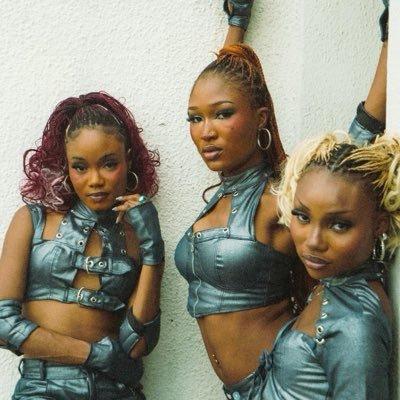
From a BTS fan group chat to an Ayra Starr comment section, MYST’s story began with a series of unlikely connections. Now, Mira, Sucre and Bella are finding their sound, building their own blueprint and making room for a new kind of girl-group experience in Nigerian music.

By Erdoo · 23 November 2026
“They are not waiting for somebody to hand them a blueprint. They are designing one themselves, and they are doing this by taking this journey one session at a time, one song at a time.”
There is something almost cinematic about how MYST came together. A flyer shared across group chats, an aunt who happened to be in the right online community, an Instagram comment section and three girls who, in different ways, had been dreaming about the same thing.
MYST — made up of Mira, Sucre and Trella— did not come together through the conventional route. Their formation was less about an industry search for the next girl group and more about three individual musical journeys finding a common ground. And perhaps that is why, when they talk about what they are building, the conversation keeps returning to one idea: they are not interested in being boxed in.
But before the music, there were three very different personalities to bring together.
Erdoo: Let’s start with the individual. What does each of you bring to MYST? How would you describe your sound and personality?
Mira: “You know, when you take cool water, that kind of energy. I feel like that’s what I bring to the group.”
Mira describes her sound as cool, edgy and understated. She is not necessarily trying to be the loudest person in the room; rather, she sees the texture of her voice and the feeling it carries as her contribution.
Sucre: “For me, I think what I bring to the group is the depth, the vulnerability and expression in the way that I write, in the way that I sing, and in the way that I put out what is in my mind. It’s like I’m taking you through a journey. I’m taking you through a story. I feel like that is what I bring to the group: the depth, the storytelling, the warmth and balance.”
Trella: “I bring the soul, the emotion, the harmonies. I basically love harmonies. I love melodies. I love any stuff that has anything good that can make you feel good. So it’s in my bloodstream, and I don’t have a choice but to just bring it out.”
The dynamism in the trio is evident. Mira brings the cool, Sucre brings the storytelling, Trella brings the soul and melody. They are not identical voices trying to occupy the same space. Their appeal lies in how those differences meet. And the story of how they met is just as unexpected as the sound they are working towards.
Erdoo: I heard you guys met through a BTS group chat. What’s the tea? Take us back to the first meeting and how the three of you decided to make music together.
Mira: “I wanted to be in a girl group. I feel like that’s something I’ve always wanted since I was little. I want to be a part of something that’s bigger than just me, and then create music that is like that missing piece of music for the world.”
That desire eventually became a flyer. Mira was at university, sharing it with class group chats, people she knew and the BTS ARMY communities she belonged to. One of those flyers reached Sucre through her aunt, who was also in the group chat. Sucre got in touch, and the first connection was made.
The third member eventually came through a different corner of the internet. Mira stumbled across Trella in Ayra Starr’s comment section. She checked out her page, liked her style and discovered that she was already making music.
Mira: “I saw she was an artiste. She was someone that was fashionable. Like, she just looked so cool. Then I texted her and told her about our dreams, and we had a chat. I heard her music, beautiful texture, and it was just the perfect fit for the whole thing.”
And that was how the Powerpuff Girls came together.

Their musical journeys had already been in motion before MYST. Sucre started making music officially in 2020, two years before meeting Mira. Bella had been singing in church choir from around the age of ten, later pursuing music professionally around 2019/2020 and releasing her first song in 2022. Mira’s journey took shape at university, where she began writing music for other people before finding herself drawn further into songwriting, singing and recording.
They were not starting from the same place, but they were arriving at a shared destination.
Erdoo: What does being part of MYST mean to each of you? And what has it been like building an all-female pop group in Nigeria?
For Mira, the group is about finding people who understand the dream without needing it explained.
Mira: “It’s been a fantasy. It just feels so amazing to have sisters that resonate with your dreams, that share like minds, and they understand you, they get you. You can just be yourself. You feel safe with them.”
She also talks about the freedom of having people around her who support her choices and have her back. It is a kind of sisterhood that makes the ambition feel less solitary.
Sucre sees MYST as a chance to build a life beyond what she once considered ordinary.
Sucre: “I’ve always told myself that I don’t want to live a normal life. I don’t want to just be like anyone. I want to be part of something great.”
For Trella, the group feels like an assurance that the person she imagined becoming is within reach.
Trella: “Being part of MYST is more like an assurance to me that I can be who I wanna be.”
She remembers always having dreams of becoming a pop star, having her own friends, her own life and her own creative world. Now, she gets to experience that dream with people who share it.
Trella: “This is what I want. This is what I love. This is what I enjoy. I feel like this is one thing that doesn’t stress me out in life. Everything else brings stress. But being in MYST itself just feels like this is my dream.”
It is clear that MYST is not some contractual arrangement for the three women. There is friendship, affinity and the freedom to become the people they have imagined themselves to be.
Erdoo: You each have your own personalities and musical instincts. How do you make those differences work together to create one MYST sound?
Sucre: “Most times, it’s not even like we just sit down and be like, ‘Okay, you do this, you do this, you do this.’ It just happens. We’re just listening to a beat, and everybody is spitting bars. Everybody is writing. And then when we come together, it just locks in.”
That is perhaps the most revealing part of MYST’s creative identity. They do not always walk into a session with assigned roles or a finished idea of what each person should contribute. Instead, they listen, write, exchange ideas and discover what the song is becoming.
Sucre: “Most times we don’t even have… It’s not like we say, ‘Oh, this is what we want to talk about.’ We just say, ‘Let’s feel this beat. Let’s see what this beat is generating, saying to us.’”
Sometimes, when they put their individual writings together, they realise they have been exploring the same idea from different perspectives. It is an organic process, one that allows each member to retain her voice while contributing to a collective sound.
The group has also evolved through different identities. Before MYST, there was Genesis; a name that represented the beginning of their journey.
Erdoo: Did MYST have a sound from the beginning, or are you still discovering it along the way?
Trella: “From the beginning of time, we’ve never been boxed. If there’s one thing we respect and we adore about ourselves, it’s each of our sounds individually and how we can blend that uniquely together.”
For Trella, experimentation is central to the group’s identity. They want to explore different sounds, feel their way through music and discover what works, rather than decide too early what MYST must sound like.
The transition from Genesis to MYST was an important point in that development.
Sucre: “I feel like moving from Genesis to MYST was a very pivotal point in our music career. I feel like that just transcended us into another level, and we hope to go higher.”
It is a journey of discovery, and they seem comfortable with not having every part of it figured out yet.
Erdoo: What does a typical MYST recording session look like, from the first idea to the finished song?
Trella: “Don’t expect too much seriousness, first thing. I think that’s the first unspoken rule. Please don’t be too serious in this session where we are.”
The atmosphere is relaxed, but the creativity is constant. Producers, team members and other people in the room can contribute. Ideas are exchanged, melodies are tried and the direction of a song can change as the session develops.
Trella: “The beats start everything. The beat creates the whole idea.”
That statement seems to sum up their approach. Rather than forcing a concept onto a production, they allow the beat to suggest the possibilities.
Sucre adds that the process is not limited to the three members. MYST also sees its wider community as part of what they are building. Their sessions often involve recording, listening back, receiving feedback and returning to a song to refine it.
Sucre: “Recording with MYST is like a very, very collaborative process. It’s a very fun process, a very creative process, cause melodies are flying left and right. Melodies are flying around.”
There can be multiple sessions before a song feels complete. They listen again, identify what needs to change and work towards the version they want people to hear.
And if you are wondering whether a MYST studio session is worth attending, Sucre has a simple response:
Sucre: “If you love music, you will love MYST recording sessions.”
Erdoo: Which Nigerian or African women made you believe there was room for you in the industry? And who outside Africa influences the sound you’re building?
For MYST, Tiwa Savage is an important reference point. They admire her confidence, audacity and the path she helped create for female Afrobeats artists.
Mira: “Tiwa Savage is a legend. She’s known for her confidence, her audacious lyrics and all of that. So she’s someone that paved the way for female Afrobeats artists.”
They also draw inspiration from the history of girl groups, mentioning the Ladiju sisters, Spice Girls, Destiny’s Child, TLC and contemporary UK group FLO.
For Sucre, the significance of seeing women succeed is not complicated.
Sucre: “These women did it, so I can do it. Like, they are still doing it, so I can do it.”
FLO’s harmonies and the way the members retain their individual identities within a group are also part of what inspires MYST. These references are not about recreating someone else’s sound. They are proof that there is room to experiment, build a group and take that music to a global audience.
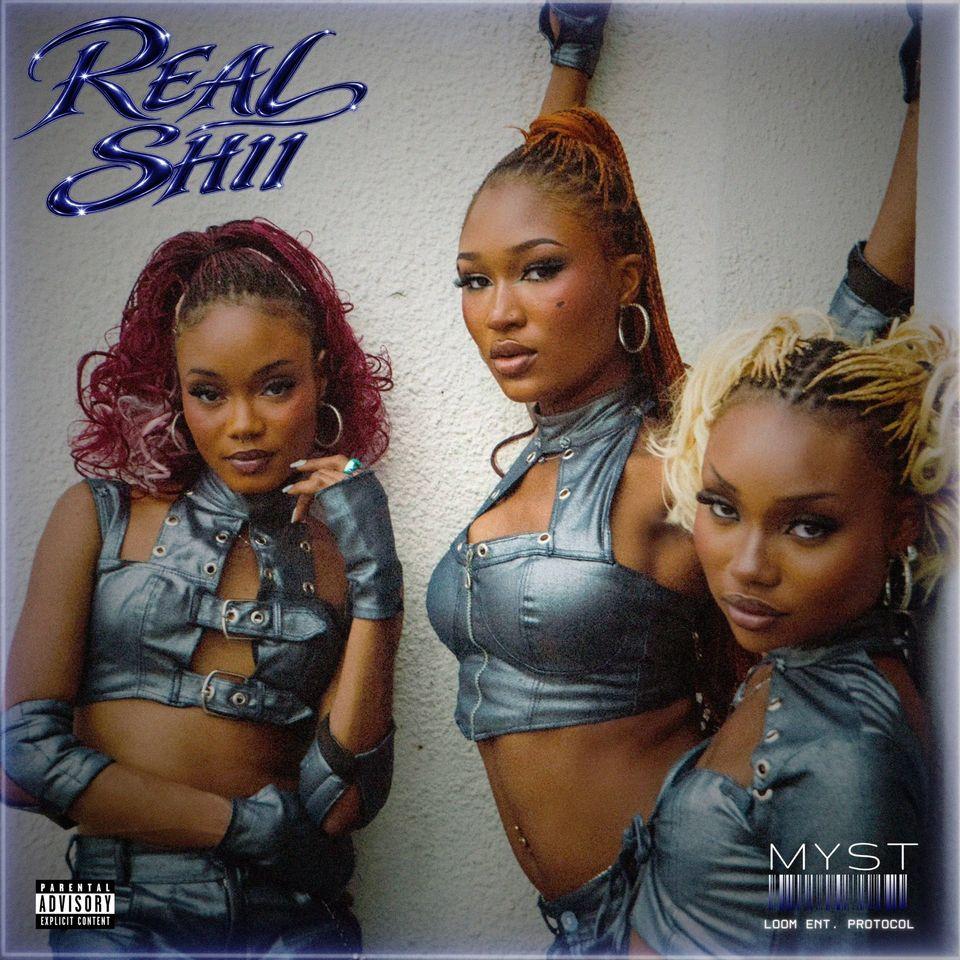
At the time of our conversation, MYST had just released their second single, “Real Shii.” The song carries an energy of divine femininity, freedom and doing whatever you want without feeling the need to apologise for it.
Erdoo: There’s talk of an upcoming EP. What can you tell us about what’s next without giving too much away?
Trella: “Let’s take it one day at a time. Step by step. We still have more. We’ve been working for years and writing music, so whatever comes, comes.”
The group is not rushing to define the next release. An album, an EP or another single are all possibilities. What matters is that listeners stay with them and enjoy the music as it arrives.
Trella: “If we drop an album, we drop. If we drop an EP, if we drop a single, we have a lot to dish out. So let’s just enjoy one beat at a time, guys. Follow us on our process.”
It is an invitation to experience MYST as they grow, rather than judge the journey by what has or has not been released yet. For now, there is “Real Shii” to enjoy, and more music waiting in the wings.
Erdoo: What is it like building MYST in an industry where there isn’t always an obvious blueprint for a girl group to follow?
Sucre: “I feel like that is the beauty of everything, because we’re building it from the ground. There are actually other girl groups in Nigeria, but everyone is a blueprint of themselves. So we’re just following, building for ourselves and exploring.”
Trella takes the thought a step further. The group does not only want to build something for themselves; they hope their journey can make the path easier to imagine for someone else.
Trella: “Setting a trail. Being a blueprint to those people that want to be something like us.”
It is a particularly interesting ambition for a group that came together through a series of online connections and a shared desire to create. They are aware of the history of girl groups, but they do not see the absence of one obvious Nigerian template as a reason to hold back.
The girls are not interested in getting caught up in proving that girl groups can be exciting.
“Girl groups are fly,” is the energy they bring to the conversation. Their immediate focus is making music that carries the right feeling and gives people something to connect with.
They want the music to speak, and they want listeners to enjoy what they are creating. There is a confidence in that answer: rather than spending all their time responding to expectations, they would rather give people a reason to pay attention.
Erdoo: How important are fashion, styling, choreography and visual storytelling to the identity you’re building?
Mira: “For MYST, the visual world around a song is not an afterthought. To us it is another way of communicating what the music means.”
Sucre: “It’s also about the visuals. It’s also about your visuals helping to show what your voice is trying to express.”
The members want their audience to experience the music through more than sound alone. Imagery, clothing and presentation all contribute to the story they are telling.
Sucre: “Our visuals, our clothing, everything, it’s very intentional.”
It is a deliberate approach to identity. The music says something, and the visuals should help the audience understand and feel it. In that sense, MYST are not just thinking about how they sound; they are thinking about the world their music creates.
Erdoo: When you look at the Nigerian music scene five years from now, what do you want MYST to have changed?
MYST: “We believe there’s a narrative about women in the music industry in general that we don’t make good music, and there’s just this standard that they lay for us that, for some reason, we can’t ever break. Women should be more audacious and surpass those barriers, those limits that are already set in stone for us.”
One of the narratives the group wants to challenge is the idea that women do not make good music, or that female artists must meet a particular standard before their work is taken seriously. They want to see women surpass those expectations, become more audacious and express themselves without being restricted by the limits others have set for them.
For them, the future should include more women taking up space, speaking about their experiences and using music to express what they think and feel.
“Music is supposed to heal you”, Trella says, a statement that captures the kind of connection they hope their music can create.
As for MYST themselves, the ambition is to make timeless music, build a solid community and take their sound to the global stage. They want to be here for the long ride.
Their story is still unfolding. From a flyer in a BTS group chat to an Instagram discovery, from Genesis to MYST, the group has grown through experimentation, friendship and the willingness to let three individual voices find their own rhythm.
And with drums and beats already in motion, MYST are ready to see just how far it can take them

- afrobeats
- MYST
- girlgroup
- interview
- ownmag